Framing the Stochastic Parrot Critique
Building on this foundation, we need to frame the debate that reduced large language models to the label “stochastic parrot” while also keeping our eyes on practical system design. The term “stochastic parrot” critiques statistical learning systems that generate plausible language by pattern-matching rather than by understanding; it’s become shorthand in discussions about reliability, hallucination, and the limits of context-aware intelligence. Right away, this reframing forces us to ask: are we evaluating only surface fluency, or are we measuring the model’s ability to ground, justify, and act on information in context?
The core claim behind the critique is simple and technical: these models optimize next-token probability over massive corpora, producing outputs that mimic distributions rather than proving causal understanding. Define “stochastic parrot” as a model that reproduces training patterns without an internal model of truth or provenance; define “hallucination” as fluent but unsupported assertions. Framing the problem this way makes it clear why naive metrics like BLEU or perplexity are insufficient for systems that must be reliable in production: high fluency doesn’t imply correct grounding, and statistical coherence can mask factual drift.
Why does this matter when you build context-aware intelligence into pipelines? Because downstream decisions—customer routing, clinical suggestions, automated compliance checks—depend on whether the system can attach evidence and uncertainty to its outputs. How do you distinguish a fluent mimic from a context-aware system that can justify answers and defer when uncertain? The practical yardstick should be measurable properties: calibration of confidence, provenance attached to assertions, and the ability to query or retract claims given new evidence.
Technically, reframing the critique moves evaluation from surface outputs to instrumentation and operational guarantees. Implement retrieval-augmented generation (RAG) so the model conditions on verified documents; attach vector DB identifiers and passage offsets to every claim so you can reconstruct provenance. Use calibration techniques—temperature scaling, Platt scaling, or isotonic regression—on model confidences and enforce token-level log-prob thresholds to trigger safe-fail behavior. Combine RLHF-style preference tuning for alignment with contrastive fine-tuning on adversarial examples to reduce brittle overgeneralization; in short, treat the model as a component in a larger system of grounding and verification, not an oracle.
Real-world examples highlight the trade-offs you’ll face. In customer support, we route low-confidence answers to human agents and surface cited documents for rapid verification; in clinical support, we require chain-of-evidence snippets and conservative answer policies that prioritize patient safety over completeness. Financial and legal systems need immutable audit trails: every model assertion should log the exact context, retrieval keys, and confidence score so compliance teams can reproduce the inference path. These patterns make the system more than a generator—they transform it into an accountable service with measurable SLAs for correctness and explainability.
Taking this concept further, the next step is operationalizing those guarantees inside your CI/CD and observability stacks. Building on this foundation, we instrument evaluation suites that test for calibration drift, set up monitoring alerts for shifts in provenance hit-rates, and bake human-in-the-loop checkpoints into high-risk workflows. That operational emphasis reframes the original critique from a dismissal into a design specification: if your system can’t provide provenance, calibrated uncertainty, and safe-fail behaviors, then the critique stands; if it can, you’ve moved toward true context-aware intelligence and practical reliability.
Defining Context-Aware Intelligence
Building on this foundation, context-aware intelligence is not an add-on feature—it’s a set of measurable system capabilities that let an AI behave responsibly inside a specific situation. In practical terms, context-aware intelligence means the system can condition decisions on temporally and topically relevant data, attach provenance to assertions, and express calibrated uncertainty so downstream processes can choose safe actions. This framing directly answers the “stochastic parrot” worry: instead of judging fluency alone, we ask whether the system can ground outputs, defer when uncertain, and revise conclusions when context changes.
At the highest level, define context-aware intelligence by three orthogonal dimensions: grounding, statefulness, and uncertainty management. Grounding requires that each substantive claim references verifiable context (document IDs, sensor timestamps, database rows) so you can reproduce why the model said what it did. Statefulness means the model maintains and reasons over relevant session history and external state—not just the last 2048 tokens—so decisions reflect ongoing interactions, transactional constraints, or workflow invariants. Uncertainty management requires confidence estimates that are both calibrated and actionable: thresholds trigger human review, automated fallbacks, or conservative policies.
How do you know when a model is truly context-aware? Use operational criteria rather than intuition. Measure provenance coverage (the fraction of claims tied to a retrievable source), temporal alignment (assertions consistent with the latest known timestamped facts), and calibration metrics such as Brier score or expected calibration error to ensure reported confidences match empirical correctness. Monitor degradation signals: falling provenance hit-rate, rising calibration error, or increased human overrides all indicate drift away from context-aware behavior. These metrics turn an abstract definition into testable SLAs you can enforce in CI/CD and monitoring pipelines.
Concrete system patterns show what this looks like in the wild. In a multi-turn support bot, implement a session store that captures entity resolution decisions, policy flags, and the provenance pointers for each claim so agents can audit and continue conversations seamlessly. For decision workflows that affect safety or compliance, encode conservative governance: require multi-source corroboration for high-impact assertions and force a human-in-the-loop when confidence falls below a threshold. In pipelines that combine streaming telemetry and language models, fuse the signals by anchoring narrative outputs to exact event IDs and sensor timestamps to prevent temporal hallucinations.
Architecturally, achieving these properties involves composition more than model magic. Combine retrieval-augmented components (with deterministic retrieval keys and passage offsets), lightweight symbolic constraints (business rules, schema checks), and a verification stage that runs fast rule-based validators or secondary models to check claims before action. Use immutable logging of context, retrieval keys, and model state so you can replay and audit any decision; this auditability is what separates a well-instrumented service from a black-box generator. We prefer designs where the model is a hypothesis generator and the system enforces verification and enforcement.
Taken together, this definition shifts the goal from producing fluent text to delivering accountable outputs you can test, monitor, and operate. The next step is mapping these capabilities into automated tests and observability—tests that simulate context drift, adversarial inputs, and provenance corruption so you can enforce reliability as code. By treating context-aware intelligence as a set of measurable guarantees rather than a vague property, you make design trade-offs explicit and create systems that move beyond the stigma of the stochastic parrot toward practical, auditable intelligence.
Designing Discerning Model Architectures
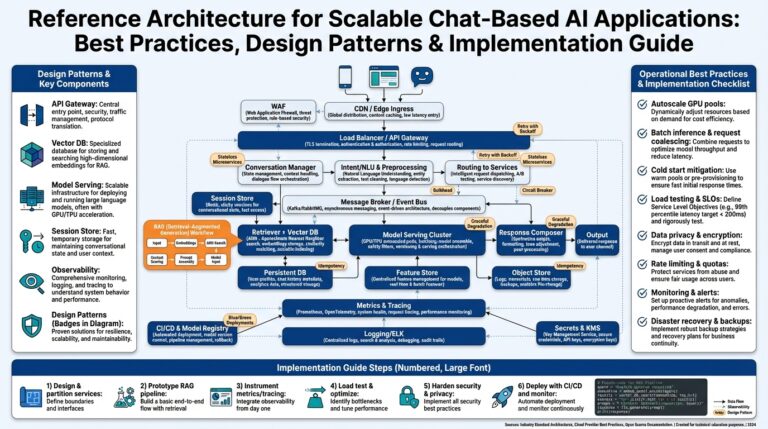
Building on this foundation, the practical question shifts from “can a model produce fluent text?” to “how do we design model architectures that act as discerning hypothesis generators inside a verifiable system?” In the first hundred words we must prioritize context-aware intelligence, so we compose architectures that integrate retrieval-augmented generation, strong provenance tracking, and explicit uncertainty channels. You want models that propose candidate answers while the surrounding architecture enforces checks, attaches evidence, and decides whether to act or defer. This reframes model architectures as modular decision pipelines rather than solitary oracles.
The first architectural principle is separation of concerns: isolate hypothesis generation, grounding, and verification into discrete components. Keep the generator (the neural model) focused on producing candidate text and confidence estimates; put grounding in a retrieval and alignment layer that returns documents, passage offsets, and source identifiers; and run a verifier stage that validates claims against those sources. This separation makes provenance explicit, reduces opaque end-to-end failure modes, and simplifies engineering trade-offs when you need to scale parts of the pipeline independently.
Next, design for statefulness and composability so the architecture preserves session context and external state beyond token windows. Implement a session store that captures entity resolution, prior decisions, and provenance pointers, and let downstream modules read/write that store deterministically. How do you decide between tight coupling and loose composition? Favor composition when you need auditable provenance and independent scaling; favor tighter integration when latency budgets are extremely strict and you can accept more constrained audit trails.
One useful pattern to implement is a two-stage flow: retrieval-augmented generation followed by a lightweight verifier and a rule-based enforcement layer. A minimal pseudocode pipeline looks like this:
query -> retriever(keys) -> documents + offsets
candidate = generator(query + documents)
claims = extract_claims(candidate)
verified = verifier(claims, documents)
if verified.confidence < threshold: route_to_human()
else return attach_provenance(candidate, documents, offsets, verified.scores)
This code pattern keeps provenance (document ids and offsets) tethered to each claim and forces a verification decision before any automated action. Embedding provenance at token or claim granularity gives you the reproducibility auditors need and the instrumentation you need to debug hallucinations.
Be explicit about trade-offs: adding retrieval and verification increases latency and operational complexity but profoundly improves reliability and auditability. In customer support workflows, that latency often buys a dramatic drop in wrong or unsupported answers; in clinical or legal settings, verification is non-negotiable even if throughput drops. Weigh caching strategies and stale-index handling carefully: a cache that speeds retrieval can increase temporal hallucinations unless you include freshness metadata and automated invalidation policies tied to your provenance records.
Uncertainty management must be an architectural first-class citizen. Combine calibrated model confidences (temperature scaling, ensemble logits) with operational thresholds that trigger human-in-the-loop workflows or conservative fallbacks. Use secondary mini-verifier models or contrastive scoring to detect unsupported claims; when combined with provenance hit-rate metrics, these signals let you automate safe-fail behavior. Calibration and provenance together let you answer: “Is this answer repeatable, supported, and safe to act on?”
Finally, bake observability, tests, and SLAs into the architecture from day one so your design stays discerning in production. Instrument provenance hit-rate, expected calibration error, verification latency, and human escalation frequency in your CI/CD and monitoring dashboards. Build replayable logs that contain query, retrieval keys, passage offsets, model logits, and verifier outputs so you can reconstruct any decision path. Taking this approach transforms model architectures into accountable systems that deliver context-aware intelligence you can measure, operate, and improve—setting up the next steps for automated testing and observability.
Data Curation and Provenance
Building on this foundation, robust data curation and provenance are the practical levers that convert a fluent language model into an accountable, context-aware system. Data curation decisions—what sources we ingest, how we normalize records, and which labels we accept—directly shape a model’s factual boundary conditions; provenance metadata records why a claim was generated and makes that boundary auditable. How do you design pipelines that make provenance first-class and data curation repeatable rather than ad-hoc?
Start by treating curation as a deterministic engineering task, not a one-off research step. Ingest, normalize, deduplicate, and annotate with explicit rules and versioned transformations so every datum carries a lineage trail. This prevents hidden selection bias from creeping into your retrieval index and gives you deterministic replay for debugging; if model outputs drift, you should be able to replay the exact ingestion + retrieval state that produced the response. Building these guarantees into ETL reduces downstream ambiguity when you attach evidence to assertions during retrieval-augmented generation.
Make provenance records compact but exhaustive: store source identifier, passage offset, retrieval key, embedding hash, retrieval score, and a freshness timestamp. For example, a provenance record can be a small immutable JSON blob created at ingestion time:
{"source_id":"wiki-v2::12345","passage_offset":432,"vector_id":"v_0a3f9","score":0.87,"timestamp":"2025-11-02T12:34:56Z","transform_version":"ingest_v3"}
Create these at the data layer so retrieval returns documents plus the exact provenance blobs that downstream components attach to each model claim. This practice makes every assertion reproducible: auditors can fetch the same passage and re-run the generator with identical inputs.
Human labeling and active curation must be tightly integrated with provenance as well. Use label schemas that embed annotator IDs, labeling rationale, and disagreement scores so that quality signals survive into training and evaluation datasets. Apply active learning to prioritize human review on low-confidence, high-impact examples and maintain label-versioning so you can roll back or compare different labeling policies. When you discover systematic errors, patch the curation rules and re-run deterministic ETL jobs rather than making one-off corrections inside model checkpoints.
In retrieval-augmented generation deployments, attach provenance at claim granularity and enforce corroboration rules for high-stakes actions. Return candidate passages with document IDs, offsets, and retrieval scores alongside model logits, and require multi-source agreement or thresholded verification for any automated decision. Use deterministic retrieval keys (document::section IDs or stable vector IDs) instead of ephemeral pointers so your provenance hit-rate—how often claims link to retrievable sources—remains measurable and meaningful.
Operationalize monitoring for both curation quality and provenance integrity. Track provenance hit-rate, proportion of claims with stale timestamps, distribution of retrieval scores, and expected calibration error for model confidences. Alert when hit-rates drop or when the proportion of claims relying on a single source exceeds policy limits; such signals often precede hallucination spikes. Instrument replayable logs that capture query, retrieval keys, passage offsets, model logits, and verifier outputs so incidents are reproducible and root-cause analysis becomes practical.
Finally, bake governance and automation into your curation pipeline so provenance survives lifecycle events. Enforce immutability for provenance records, run CI tests that simulate index corruption and provenance loss, and include automated invalidation policies tied to freshness metadata. Treat provenance as an SLA metric—measure it, test it, and require it before any automated action. Taking these steps moves provenance from a compliance checkbox into an operational capability that keeps context-aware intelligence auditable, reproducible, and safe as you scale.
Grounding with Retrieval-Augmented Generation
Building on this foundation, the practical job is turning a fluent language model into a reliably grounded system through retrieval-augmented generation (RAG). We want the model to produce answers that are tethered to verifiable evidence, not just high-probability tokens, so our engineering choices must prioritize reproducible provenance and measurable truthfulness. Start by treating grounding as a retrieval problem plus a verification problem: retrieve candidate passages deterministically, surface their identifiers and offsets, and force the generator to cite or abstain. How do you make those pieces work together at scale and low hallucination risk?
The first technical decision is your retrieval stack: sparse search (BM25) gives robust term-matching while dense embeddings capture semantic similarity, so hybrid retrieval often yields the best coverage. In practice we run BM25 for precision on named entities and an ANN lookup over embeddings for paraphrase recall, then merge and rerank results by a relevance scorer that considers both scores. Retrieval-augmented generation depends on that merged candidate set: if your retriever misses a source, no generator prompt engineering will prevent hallucination. Therefore invest in high-quality negative sampling and rerankers early—these reduce noise before the model ever sees bad context.
Embedding model choice and index design matter as much as model prompts. Choose an embedding model aligned with your domain (instruction-tuned or domain-finetuned embeddings for specialized corpora) and store stable vector IDs and metadata in your vector database so retrieval returns reproducible provenance. Monitor embedding drift: when upstream text distributions change, embedding embeddings can migrate and reduce hit-rate, so schedule periodic reindexing with deterministic transforms. A vector database that preserves document IDs, passage offsets, ingestion timestamps, and transform versions lets you trace every claim back to the exact passage used to generate it.
Chunking and provenance granularity determine how precisely you can ground claims. Use passage sizes tuned to your model’s context window and to the typical claim length in your domain—smaller chunks increase pinpointed provenance but can fragment context, while larger chunks reduce fragmentation but dilute exact offsets. For high-stakes assertions, attach provenance at the claim or sentence level: record document::passage_id, offset, retrieval_score, and embedding_hash alongside the model logits so auditors can recreate the original inputs. This claim-level provenance is what enables deterministic replay, compliance audits, and forensic debugging when outputs are contested.
Architecturally, decide where to fuse retrieval with generation: retrieve-then-generate (RAG) and Fusion-in-Decoder (FiD) both work, but they trade latency and fidelity differently. FiD-style decoding lets the generator attend over multiple passages deeply and can improve factuality at cost of compute, whereas token-level retrieval (RAG-Token) can be faster but requires stronger reranking and verification to avoid spurious attributions. We also recommend a lightweight verifier after generation—either a contrastive scoring model or a rule-based checker—that validates claims against the returned passages and flags or abstains when corroboration fails.
Operationalizing grounding means baking monitoring, thresholds, and fallbacks into the pipeline. Instrument provenance hit-rate, retrieval score distributions, and expected calibration error; trigger reindex jobs when hit-rate or freshness drops. Cache high-confidence retrievals to reduce latency but attach freshness metadata and automatic invalidation to avoid temporal hallucinations. Finally, enforce policy: if verifier confidence is below threshold, route to human review or return a conservative, citation-heavy response. With retrieval-augmented generation, grounding becomes an engineering discipline—vector database hygiene, deterministic provenance, and verification pipelines together give you the auditable, context-aware intelligence you need.
Reducing Hallucinations and Bias
Hallucinations and bias are the two failure modes that most directly undercut trust in production AI, and you need practical, measurable controls to reduce both while preserving utility. From day one we should treat hallucinations as a signal-conditioning problem—missing or misleading context plus overconfident generation—while treating bias as a distributional and label-quality problem that shows up across subpopulations. Building safeguards into the pipeline gives you the ability to detect, quantify, and remediate these issues rather than hoping model scale will erase them. Front-load grounding, provenance, and calibrated uncertainty in every response path so downstream systems can treat outputs as hypotheses, not facts.
Building on this foundation, diagnose where hallucinations and bias originate in your stack so you can intervene at the right layer. Data selection and transformation introduce selection bias and label noise; retrieval failures and stale indexes create gaps that models fill with plausible but incorrect details; and loss functions that reward fluency over fidelity amplify confident hallucinations. For bias, annotation schema, underrepresented cohorts, and feedback loops (e.g., automated decisions that affect future data) compound disparities. Understanding these sources lets you choose targeted mitigations—data interventions when the problem is upstream, verifiers when the problem is downstream, and interface constraints when operational decisions demand conservatism.
Reduce hallucinations by forcing evidence-first flows and conservative decision logic at the claim level. Use retrieval-augmented generation with deterministic retrieval keys and return passage offsets so each assertion can be tied to a concrete source; run a lightweight verifier that cross-checks extracted claims against those passages using contrastive scoring or a fact-checking model. Calibrate model confidences (temperature scaling or isotonic regression) and implement hard thresholds that trigger abstention or human-in-the-loop routing when evidence coverage or verifier scores fall below policy. In practice, we compose a generator, an extractor, and a verifier so the system returns “supported,” “unsupported,” or “defer,” attaching provenance blobs to any supported claim for reproducibility.
Tackle bias through deliberate curation, augmentation, and targeted evaluation rather than ad-hoc fixes. Perform counterfactual data augmentation to expose the model to alternate demographic or contextual framings, reweight training examples to correct sampling skews, and run domain-adaptive fine-tuning on vetted, diverse corpora where available. How do you measure bias in the wild? Instrument subgroup metrics—per-demographic precision/recall, false positive/negative rates, and disparity measures such as differences in calibration across groups—and prioritize fixes that reduce harm in high-impact slices. Embed annotator metadata and disagreement rationales in your training records so you can trace labeling decisions and roll back or re-label systematically when bias patterns emerge.
Architect for detection-and-repair rather than trust-by-default: ensemble verifiers, selective abstention, and model-editing tools give you surgical control. Use independent secondary models to score factuality and consistency, run cross-checks where two generators must agree on a claim before action, and apply targeted model editing (e.g., ROME-style patching or approximate fine-tune patches) for narrow, high-confidence fixes. Accept trade-offs explicitly: more verification increases latency and cost but reduces hallucination risk; automated edits reduce repeat errors but require strong regression testing. Design fallback behaviors—conservative summaries, citation-heavy answers, or human escalation—so the user experience degrades gracefully when confidence or fairness guarantees fail.
Operationalize continuous measurement and feedback loops so reductions in hallucinations and bias persist over time. Track provenance hit-rate, hallucination incidence (claims with no retrievable support), expected calibration error, and subgroup performance in your observability dashboard; set alerts for drift in any of these signals. Run synthetic adversarial suites and canary releases that probe for hallucination-prone prompts and bias regressions before wide rollout, and automate retraining or index refreshes when drift thresholds trigger. Maintain replayable logs that capture query, retrieval keys, passage offsets, model logits, verifier outputs, and human override decisions so you can reproduce failures and validate fixes.
Reducing hallucinations and bias is an engineering discipline that combines data hygiene, systems design, and continuous evaluation—there is no single patch that eliminates both. By treating the model as a hypothesis generator and building grounding, verification, and fairness checks around it, you gain operational levers to tune safety and reliability. In the next section we’ll translate these guarantees into automated tests and observability patterns you can run in CI so your reductions in hallucination and bias become repeatable, measurable improvements rather than one-off wins.
Evaluation, Monitoring, Auditing
Building on this foundation, treat evaluation, monitoring, and auditing as operational controls rather than optional reports—these are the mechanisms that turn a hypothesis generator into a dependable service. We want evaluation to measure grounding and calibration, monitoring to detect runtime drift and failure modes, and auditing to make every decision reconstructable for compliance and debugging. Front-load metrics like provenance hit-rate, expected calibration error (ECE), hallucination incidence, and verifier pass-rate so you can act on concrete signals instead of intuition. In practice, these three activities become the backbone of observability and SLAs for any context-aware intelligence pipeline.
Start evaluation with metrics that reflect real operational goals rather than only fluency scores. Define calibration (how well reported confidences match empirical accuracy), and measure it with ECE and Brier score; define provenance coverage as the fraction of substantive claims tied to retrievable sources; define hallucination incidence as claims with no supporting passage above a retrieval threshold. How do you know when a model is becoming less reliable? Create slices tied to downstream risk—high-impact queries, long-tail entities, and temporal claims—and evaluate precision/recall and calibration per slice so you can prioritize fixes where they matter most. Use adversarial and counterfactual test cases to probe brittleness, and record evaluation artifacts (queries, retrieval keys, verifier outputs) to make comparisons deterministic.
Monitoring detects problems the moment they emerge in production and lets you automate containment. Instrument runtime signals such as provenance hit-rate, median retrieval score, verifier pass-rate, expected calibration error drift, response latency, and human escalation frequency; set policy-driven thresholds that trigger canary rollbacks or automated throttles. For example, in a support-bot pipeline, route responses with provenance hit-rate below policy or verifier confidence under threshold to a human queue and alert on rising override rates—those are high-fidelity early warnings of index corruption, embedding drift, or prompt-engineering regressions. Correlate these signals with downstream KPIs (wrong-answer incidents, churn, compliance exceptions) so alerts map directly to business impact.
Make auditing immutable and replayable so every decision is reconstructable for engineers, product owners, and regulators. Log compact provenance blobs (document IDs, passage offsets, embedding hashes, retrieval scores) alongside the full inference trace (input prompt, generator logits, extracted claims, verifier outputs, timestamp, and annotator IDs when human edits occur). A small provenance record might look like:
{"source_id":"docs-v4::A12","passage_offset":320,"vector_id":"v_9b7","retrieval_score":0.82,"timestamp":"2025-11-02T12:34:56Z","verifier_score":0.91}
Store these logs immutably so you can replay the exact retrieval + generation + verification pipeline to reproduce a contested output, perform root-cause analysis, or produce audit artifacts for compliance teams. Version your ingestion transforms and index snapshots so an auditor can re-run the same index state that produced the response.
Embed automated tests and canary evaluation into CI/CD so evaluation and monitoring are not afterthoughts. Run synthetic adversarial suites, provenance-corruption tests, and calibration-regression checks on every model or index change; gate releases on regression tolerances for ECE, provenance hit-rate, and hallucination incidence. Use lightweight canary traffic in prod to validate calibration drift and retrieval fidelity before full rollout, and automate rollback when key indicators cross defined thresholds. Treat these tests as living code: update them when you add new data sources or change SLAs.
Operational governance ties human workflows to metrics so teams can act on audit evidence efficiently. Define escalation policies based on verifier scores and provenance coverage rather than raw logits; sample audited transactions regularly for manual review and use those labels to retrain verifiers and improve curation. Track governance KPIs—time-to-rollback, audit-latency, human-escalation-rate—and bake them into SLOs so teams are rewarded for detection and repair, not silence. This creates a feedback loop where auditing informs monitoring which in turn refines evaluation.
Taking this concept further, weave these capabilities into your observability stack: dashboards that surface calibration drift per slice, alerting on provenance degradation, and replayable traces for forensic debugging. By treating evaluation, monitoring, and auditing as integrated engineering features rather than compliance chores, we make context-aware intelligence auditable, measurable, and operable at scale—and prepare the system to evolve safely as we add capability and complexity.