Understand Data Science Basics (intellipaat.com)
Building on this foundation, you now arrive at the part where data science basics start to feel real. Imagine you have a table full of sales numbers, website clicks, or customer responses, but at first glance it looks like noise. This is where data science steps in, not as magic, but as a careful way of turning raw information into useful insight. If you have ever wondered, “How do you make sense of messy data and use it to make better decisions?”, this is the first door we open.
The heart of data science basics is learning what data actually is and why its shape matters. Some data comes neatly organized in rows and columns, like a spreadsheet of monthly expenses, while other data feels more like a pile of notes, images, or messages. That difference matters because each kind needs a different approach. When you begin to understand data science basics, you start seeing that the first job is often not analysis at all, but preparation: collecting the right data, checking it for errors, and making it ready to explore.
Now that we understand the raw material, we can look at the main players in the story. Data science usually brings together statistics, programming, and domain knowledge, which means you are not only reading numbers but also asking what they mean in a real business or product setting. Statistics helps you notice patterns and avoid jumping to the wrong conclusion. Programming gives you the tools to handle large datasets efficiently, and domain knowledge helps you interpret the result in context, whether you are looking at customer behavior, hospital records, or manufacturing output.
This is where things get interesting, because data science basics are really about asking better questions. Instead of staring at a chart and saying, “What happened?”, you begin asking, “Why did it happen?”, “What might happen next?”, and “What should we do about it?” That shift changes everything. A simple example is a store noticing that sales drop on weekdays; once you look deeper, you may find that traffic is lower, promotions are missing, or the product mix is not matching customer needs.
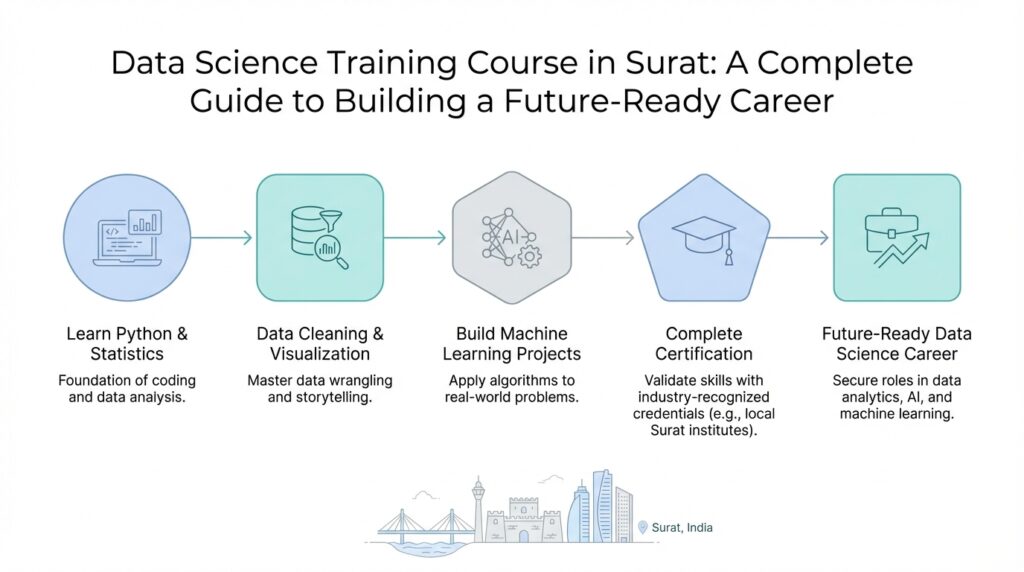
To move from curiosity to insight, you need a few core steps that work like a recipe. First, we clean the data by fixing missing values, duplicates, and obvious mistakes. Then, we explore it by summarizing trends and creating visual patterns that are easier to read than rows of numbers. After that, we may build a model, which is a mathematical method that learns from data and helps us make predictions or classifications, such as identifying likely customers or forecasting demand. Each step matters because weak data science basics often lead to weak results, no matter how advanced the final tool looks.
Understanding common terms also makes the learning journey less intimidating. A dataset is simply a collection of related data points, a feature is one piece of information inside that dataset, and a model is the pattern we train from those features. If those words feel unfamiliar now, that is perfectly normal; they are the vocabulary of the field, and they become easier with use. In practice, data science basics are less about memorizing definitions and more about recognizing how the pieces fit together in a real workflow.
As you build confidence, you begin to see why this foundation matters for every later skill. Machine learning, dashboards, predictive analytics, and AI all depend on a solid grasp of these basics, because advanced tools can only work well when the underlying data is understood. So before you chase complex techniques, it helps to slow down and learn how data is structured, cleaned, questioned, and interpreted. That foundation gives you the confidence to move forward, and it turns the rest of the journey into something far easier to navigate.
Pick a Practical Training Course (trainings.internshala.com)
Building on this foundation, the next question is not what data science means, but which training will help you practice it well. When you compare a data science training course in Surat, look for something that feels like a guided workshop, not a passive lecture. You want regular quizzes, hands-on work, and a clear path from one concept to the next, because that is how beginners move from recognition to real skill. How do you know a course will do that? Look for a structure that asks you to learn, test yourself, and then apply the lesson in a project.
That is where Internshala’s beginner-friendly option becomes interesting. It is an 8-week online course in Surat, designed with no prerequisites, so you are not expected to arrive already comfortable with coding or statistics. The pacing is also built for real life: the platform recommends about 1 hour a day, and you can choose a batch date that fits your schedule. For someone trying to start carefully, that kind of structure can make a data science training course in Surat feel manageable instead of overwhelming.
Practical training matters because data science becomes real only when you start working with actual tools and not just reading definitions. This course covers Excel, Tableau, SQL, Python, machine learning, and a capstone project, so you can see how raw data moves through analysis, visualization, and prediction. Think of it like learning to cook by making full meals instead of reading recipes alone: the steps stay with you because you used them. That mix of software, exercises, and project work is what gives a practical course its value.
It also helps when the course supports you the moment a concept starts to wobble. Internshala says learners get quizzes, module tests, hands-on practice, expert doubt solving through a Q&A forum within 24 hours, and downloadable videos for later revision. The course also includes AI tools such as ChatGPT and Gemini for tasks like exploring datasets and cleaning errors, which reflects how modern data work often blends classic methods with AI-assisted workflows. If you are wondering whether that makes the learning feel current, it does, because you are not only studying theory; you are learning how the work is being done now.
Finally, a practical choice should help you move beyond learning and toward opportunity. Internshala pairs the training with placement assistance, including resume preparation, application support, curated internships and jobs, and extra visibility for top performers, along with dual certification from Internshala Trainings and NSDC/Skill India in collaboration with IIT Madras Pravartak. That matters because a good course should leave you with proof, not only knowledge, and that proof can make your next step easier to take. So when you compare options, look for this same balance of structure, practice, support, and career direction in any data science training course in Surat.
Learn Python, SQL, and Statistics (intellipaat.com)
Building on this foundation, we now move from understanding data science to learning the three skills that make it practical: Python, SQL, and statistics. If you are choosing a data science training course in Surat, this is the point where the path stops feeling abstract and starts looking useful. How do you turn a pile of rows, columns, and numbers into something you can explain with confidence? You begin by learning how to move through data, ask it the right questions, and test the answers carefully. Intellipaat’s data science programs place these skills at the center of the curriculum, alongside projects and hands-on practice, because they help you go from raw information to real insight.
Python is usually the first tool that makes the journey feel alive. It is a programming language, which means you can use it to tell a computer what to do step by step, and Intellipaat highlights it for data work with libraries such as Pandas, NumPy, and Matplotlib. In plain language, Python helps you clean data, reshape it, and explore patterns without doing every task by hand. Think of it like a versatile workshop tool: one moment you are trimming away messy pieces, and the next you are putting the cleaned parts into a clearer shape.
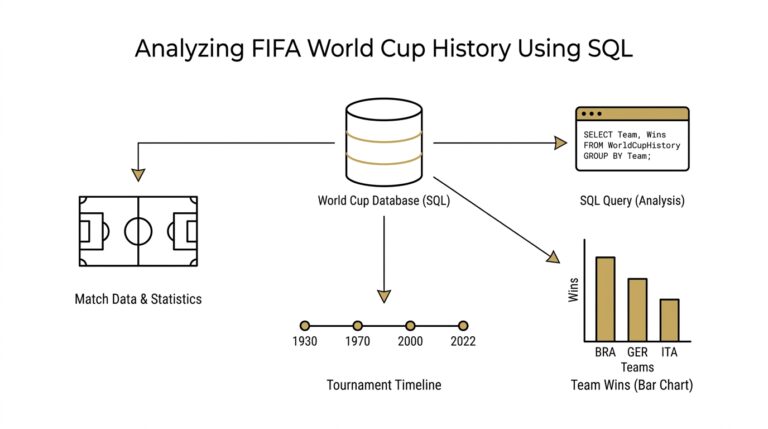
Then comes SQL, the language used to ask databases for the exact information you need. Instead of pulling a giant file and hoping the useful rows are somewhere inside, SQL helps you fetch only the records that matter, combine tables, and prepare data for analysis. Intellipaat’s curriculum includes data wrangling with SQL and lists SQL for database querying, which is why this skill often acts like the bridge between business systems and your Python notebook. Once SQL starts making sense, you begin to see databases less like locked vaults and more like organized libraries you can search with purpose.
Statistics is the skill that keeps your conclusions honest. It is the practice of using numbers to summarize data, spot variation, and judge whether a pattern is likely meaningful or just a coincidence. Intellipaat’s data science curriculum includes statistics, probability, linear algebra, and advanced statistics, showing that the learning path is not only about tools but also about reasoning. That matters because a chart can look convincing even when the story behind it is weak, and statistics is what helps you slow down and check the evidence before you act.
Now that we see the trio as a workflow, the learning path becomes much easier to follow. SQL gathers the data, Python cleans and explores it, and statistics helps you test what you found before you make a recommendation. Intellipaat reinforces that sequence with Python fundamentals, SQL wrangling, statistics, and real-time industry projects, so you are not learning each piece in isolation. That is the real advantage of a practical data science training course in Surat: the skills start to connect, and the whole process begins to feel like one continuous story instead of separate lessons.
If you are comparing options, look for a course that teaches Python, SQL, and statistics as connected skills rather than isolated topics. Real data work rarely arrives in neat pieces; it asks you to retrieve information, shape it, and defend your conclusion in one flow. A strong program should give you repeated practice with datasets, projects, and feedback so these ideas settle in naturally. That is why Intellipaat’s bootcamp model, with its hands-on projects, mentorship, and placement support, fits the kind of beginner-friendly training many learners want when they start a data science training course in Surat.
Build Real-World Data Projects (intellipaat.com)
Building on this foundation, the next stage is where data science starts to feel tangible. In a data science training course in Surat, you are no longer only learning Python, SQL, and statistics—you are using them to solve problems that look and feel like work. That is why Intellipaat’s bootcamp leans on real-life projects, industry-specific projects, and hands-on assignments, instead of stopping at definitions alone. It also makes project work part of the certification path, so the learning journey and the proof of learning stay connected.
The best projects begin with a question, not a tool. You might ask, for example, why customers stop buying, which products move together, or how a business can forecast demand before stock runs low. How do you know whether a project is real-world enough to matter? It should have messy data, a clear decision behind it, and a result you can explain to another person without hiding behind jargon. Intellipaat describes its bootcamp as using real-world scenarios and case studies, including examples that range from e-commerce demand prediction to health analytics.
Once that question is clear, the work begins to feel like following a recipe. First, you gather the ingredients, which means collecting the right dataset; then you clean the data, which is the careful work of fixing missing values, duplicates, and mismatched formats; then you explore patterns with charts, summaries, and comparisons. In the project set Intellipaat lists, you can see this journey in action through customer churn analysis, financial data visualization, loan approval prediction, web scraping, and market basket analysis. Each one trains a slightly different muscle, but all of them teach you the same habit: turn raw information into a decision someone can trust.
This is where a capstone project becomes especially valuable. A capstone project is a final, larger project that brings several skills together in one place, much like a final performance after many practice sessions. Intellipaat says its capstone work focuses on extracting, loading, and transforming data, preparing features, selecting and building models, and assessing those models afterward. That matters because it mirrors how real teams work: they do not use analysis only to look smart, they use it to reach a conclusion they can defend. Intellipaat also notes that certification is awarded after project work is completed and reviewed, which gives the project phase real weight.
As we discussed earlier, the tools matter—but projects are what make those tools stick in your memory. When you build real-world data projects, you are creating more than a class assignment; you are building a portfolio piece, a conversation starter, and a story you can bring into interviews. That is especially useful in a data science training course in Surat, because employers want to see how you think through a problem, not only whether you can name a method. With that mindset, every project becomes practice for the work you want to do next.
Prepare for Interviews and Placements (intellipaat.com)
Building on this foundation, the next step is where your learning starts to meet the real world. A data science training course in Surat can teach you the tools, but interviews and placements ask a different question: can you explain what you learned, show how you used it, and convince an employer that you can keep learning on the job? That shift can feel intimidating at first, because now you are not only a student of data science—you are also a candidate preparing to tell your story clearly.
The smartest interview preparation begins with your own work. Before you worry about hard questions, you need to revisit the projects, case studies, and assignments you already completed and understand them well enough to explain them in plain language. Think of your project portfolio like a travel diary: it should not only show where you went, but also what you noticed along the way, what problems you solved, and what choices you made when the path was unclear. When you can walk someone through your process from raw data to final insight, you stop sounding rehearsed and start sounding credible.
So how do you prepare for interviews in a way that feels practical instead of overwhelming? You start by practicing the most common layers one by one: resume discussion, project explanation, technical questions, and communication. Resume questions test whether you can speak honestly about your background, while technical questions check whether you understand Python, SQL, statistics, and machine learning at a working level. Communication questions matter too, because employers are not only hiring a technician; they are hiring someone who can discuss findings with teammates, managers, and clients without losing the thread.
This is where mock interviews become extremely useful. A mock interview is a practice interview that simulates the real thing, which means you get to stumble, recover, and improve before the stakes are high. If your data science training course in Surat offers mock sessions, use them to practice explaining a model, defending a result, and handling a question you did not expect. That kind of rehearsal helps you notice small gaps, like forgetting to define a metric clearly or rushing through the business impact of a project.
Placement preparation also becomes stronger when you treat your resume and portfolio as living documents. Your resume should read like a careful map of your skills, not a crowded list of tools you once saw in class. Your portfolio should show evidence of work through notebooks, dashboards, presentations, or case studies, because recruiters often want to see how you think, not just what software names you recognize. In a good data science training course in Surat, this stage should feel supported rather than lonely, because guidance on resumes and applications can save you from common beginner mistakes.
As we discussed earlier, data science is not only about models; it is about reasoning. That same idea applies in placements, where aptitude tests, coding rounds, and HR interviews each look for a slightly different kind of readiness. Aptitude questions check how you solve problems under time pressure, coding rounds check whether you can translate logic into code, and HR rounds check whether you can communicate with confidence and honesty. Once you see these stages as separate rooms in the same house, the process feels less mysterious and much easier to navigate.
Strong placement support can make that journey feel less like guessing and more like training with a guide. When a course offers application support, interview practice, curated openings, and feedback on your performance, you get more than information—you get momentum. That is especially valuable in a data science training course in Surat, where many learners are balancing study with work, family, or a career change and need a clear path forward. At that point, preparation is not just about passing an interview; it is about becoming comfortable presenting your skills as evidence of readiness, so when the right opportunity appears, you are already prepared to step in.
Explore Career Paths in Surat (trainings.internshala.com)
Building on this foundation, the question now becomes more practical: what kind of work can you actually do after a data science training course in Surat? In a city where textile businesses, diamond trading, retail, logistics, and manufacturing all generate huge amounts of information, data is everywhere waiting to be interpreted. That means your learning is not drifting into theory; it is pointing toward real jobs where someone needs to make sense of numbers, patterns, and trends. When you begin to explore career paths in Surat, you start to see that data science is not one narrow road but a network of possible first steps.
One of the most natural entry points is the data analyst role. A data analyst collects data, cleans it, studies it, and turns it into charts or reports that others can understand. Think of it like being the person who turns a cluttered desk into an organized story. A business analyst does something closely related, but with more focus on decisions and processes, asking what the numbers mean for sales, operations, or customers. A business intelligence analyst, or BI analyst, builds dashboards, which are visual summaries that help teams track performance at a glance. If you are wondering, “How do I know which path fits me?”, these roles are often the best place to start because they build directly on SQL, Python, and statistics.
Taking this concept further, some learners discover they want to work closer to modeling and prediction. That is where a junior data scientist path begins to open up. A model is a trained pattern that helps a computer make predictions, such as forecasting demand or spotting unusual behavior in customer data. In Surat, that kind of work can support planning in retail, quality checks in manufacturing, or customer analysis in growing digital businesses. You do not need to become an expert overnight to move toward this path; you need enough practice to understand how data flows from collection to insight to prediction. A strong data science training course in Surat should help you see those layers clearly, rather than making advanced titles feel distant or unreachable.
There are also career paths that sit between reporting and analytics, and they matter more than many beginners realize. Roles like reporting analyst, SQL analyst, or MIS analyst often involve preparing regular updates for teams and leadership. MIS stands for Management Information System, which is a structured way of organizing and sharing business data so people can follow what is happening day to day. These jobs suit people who enjoy accuracy, routine, and careful checking, especially in industries where small mistakes can affect inventory, delivery timelines, or production schedules. If you like being the person who keeps the picture clear and dependable, this path can be a strong starting point.
What makes career exploration easier is matching the role to the kind of work you naturally enjoy. If you like digging through numbers and finding patterns, data analyst roles may feel comfortable. If you enjoy explaining findings to others and connecting them to business goals, business analyst work may suit you better. If you are drawn to experimentation, automation, and building predictive systems, a junior data scientist track may feel more exciting. This is why your projects and interview practice matter so much, because they help you test your interests in a real way instead of guessing from job titles alone. A data science training course in Surat becomes more valuable when it helps you discover not only what the market wants, but also where you fit.
As we discussed earlier, a good learning path should not leave you with knowledge alone; it should help you imagine a future role with clarity. In Surat, that usually means starting broad, then narrowing your focus as your confidence grows. You do not need to choose your forever job on day one, but you do need enough exposure to recognize the work that feels natural to you. With that clarity, you can shape your projects, resume, and applications around the role that feels most like your own next chapter.