Choose the Right Tool
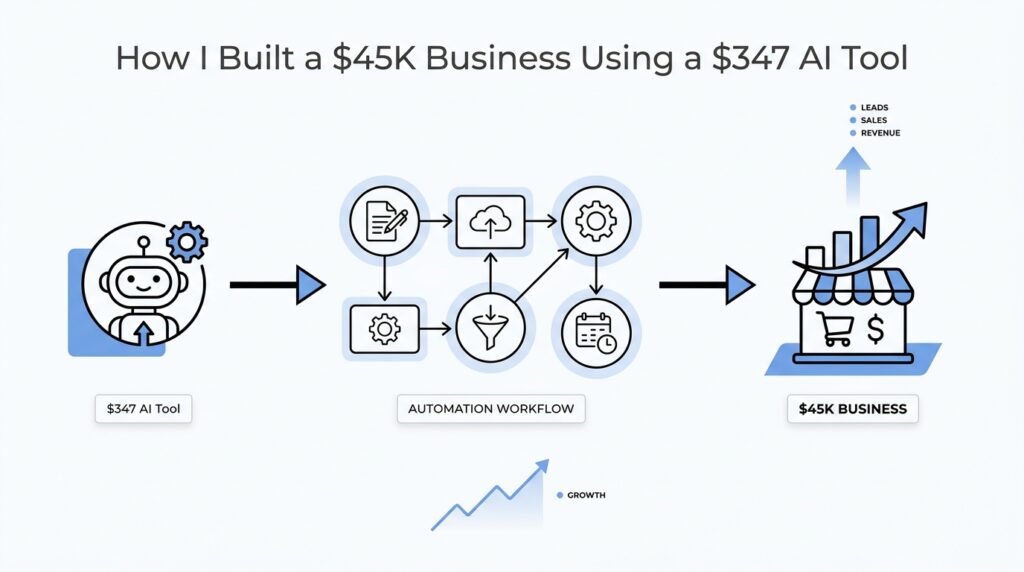
The first real turning point in building a business with an AI tool is not the flashy part people imagine. It is the quiet moment when you stop looking for the most impressive platform and start looking for the one that fits the job in front of you. A $347 AI tool only becomes valuable when it solves a painful bottleneck, saves real time, or helps you create something customers will pay for. That is why the right tool matters more than the loudest marketing promise.
When we first start comparing options, it is easy to get pulled into feature lists that blur together. One platform claims to write better, another claims to automate faster, and a third promises to do everything at once. The trick is to ask a more grounded question: what work do you actually need this tool to do every week? If you are wondering, “What is the best AI tool for a small business?” the answer depends less on the brand and more on whether it fits your workflow, your skill level, and the problem you are trying to remove from your day.
The right tool usually feels less like a luxury and more like a helper that slips into place. Think of it the way you would choose a kitchen knife: you do not buy the fanciest one on the shelf, you buy the one that feels steady in your hand and does the job you repeat most often. In the same way, an AI tool should match the work you do again and again, whether that means drafting emails, turning rough ideas into polished content, organizing leads, or speeding up research. If it cannot handle your most repetitive task, it will not carry much weight in the business.
This is also where cost needs to be understood in a smarter way. A tool priced at $347 is not expensive if it replaces several hours of work every week or prevents you from hiring too early. But a cheap tool can still be wasteful if it looks good on paper and then sits unused because it is awkward, confusing, or missing one important feature. The real question is not whether the price feels high at first glance. The real question is whether the AI tool pays for itself through time saved, mistakes avoided, or revenue created.
As you compare options, look closely at three things: how easily the tool fits into your daily routine, how much setup it needs, and how much thinking it removes from your plate. Some tools are powerful but clumsy, like a machine with too many switches for a simple task. Others are lean and focused, which often makes them more useful for a growing business because you can start using them right away instead of spending days learning the system. The right tool should reduce friction, not add another layer of work.
You also want a tool that grows with you without forcing you to rebuild everything later. That matters because businesses change fast, and the tool that helps you get your first sale should also have room to support your tenth. Look for a platform that can handle more volume, more projects, or more complexity as your needs expand. When an AI tool supports both the early stage and the next stage, you protect yourself from having to switch systems just as momentum starts building.
In the end, choosing the right tool is really about choosing leverage. You are not buying software for the sake of having software; you are buying time, focus, and consistency. Once you see it that way, the decision becomes clearer, because the best AI tool is the one that helps you do less busywork and more of the work that actually moves the business forward.
Define the Core Offer
Once we have the right AI tool in place, the next question becomes much more human: what are we actually offering people? This is where the business starts to feel real. A core offer is the clear promise you make to a customer, the problem you solve for them, and the result they can expect. If the AI tool is the engine, the core offer is the destination. Without that destination, even the best AI tool for a small business can end up speeding in circles.
At this stage, many beginners try to sell too much at once. They bundle every skill, every idea, and every possible bonus into one confused package, hoping something will stick. That usually makes the message blur instead of sharpen. A stronger core offer is more like a storefront sign with one bright message: “We help you do this specific thing.” When someone can read your offer and immediately know what you do, you have given them a reason to keep walking toward you instead of moving on.
The easiest way to define the core offer is to start with the pain you remove. What is the annoying, expensive, or time-consuming problem your customer wants gone? Maybe they need content that shows up consistently, maybe they need leads organized, or maybe they need a process that takes a task off their plate. If you have ever asked, “What is the best AI tool for a small business?” the real answer depends on the offer behind it, because the tool only matters once we know what work we are trying to produce. The clearer the pain, the easier it becomes to shape an offer people actually want.
A useful offer usually has three parts: who it is for, what outcome it creates, and how it gets delivered. That sounds technical at first, but it is really just a way of keeping your message tidy. For example, “I help local businesses create weekly blog content faster using AI” is much easier to understand than “I do marketing, content, automation, and strategy.” The first sentence gives the customer a picture they can hold in their mind. The second sentence asks them to do too much work, which is rarely a good sign.
This is also where your AI tool starts to earn its place. A core offer gives the tool a job, and a job gives the tool direction. Instead of using AI to generate random ideas, you use it to repeat the same valuable transformation over and over again. That repetition matters because a business grows when it can deliver consistent results, not when it has one lucky win. Once you know the offer, you can use the AI tool to speed up drafts, tighten messaging, organize research, or create a repeatable workflow that feels steady instead of improvised.
Think of it like cooking for the first time in a real kitchen. If you do not know what meal you are making, every ingredient looks important and every tool feels optional. But once the recipe is chosen, the knives, pans, and measuring cups suddenly have a purpose. Your core offer works the same way. It tells you what to make, who it is for, and what “done well” looks like, which is exactly what makes an AI tool for small business feel powerful instead of scattered.
When you define the core offer clearly, you stop selling effort and start selling outcome. That shift is what makes the business easier to explain, easier to market, and easier to deliver. It also gives the AI tool something concrete to amplify, which is where the leverage begins to show up in a real way. From here, the next move is to shape that offer into something people can understand quickly and say yes to without hesitation.
Build the First Workflow
Now that the offer is clear, the next step is to turn it into a small business workflow the AI tool can repeat without drama. This is where the idea stops floating around in your head and starts behaving like a real system. If you have been wondering, what does the first AI workflow for a small business actually look like? the answer is usually smaller and more practical than people expect. We are not building a giant machine yet. We are building one dependable path from problem to result.
A workflow is a repeatable sequence of steps that turns raw input into useful output. That sounds technical, but in daily life it works a lot like making breakfast: you gather ingredients, follow a sequence, and end up with something you can actually serve. In business, the ingredients might be a client request, a rough idea, a few research notes, or a blank page. The output might be a blog draft, an email sequence, a lead list, or a content plan. The point is not complexity. The point is consistency.
This is why the first workflow should be built around one task you already repeat. If your offer is weekly blog content, for example, then the workflow might start with a topic idea, move into AI-assisted research, continue into a first draft, and finish with human editing. Each step has one job, and that clarity keeps the process from slipping into chaos. When we build an AI workflow for small business, we want the tool to reduce decision-making, not create more of it. A good first workflow feels like a path with signposts, not a maze with surprises.
The easiest way to create that path is to write down the steps as if you were teaching someone else. First, decide what triggers the workflow. Next, decide what information the AI needs. Then decide what the AI should produce, and finally decide who checks the result. Here, a prompt is the instruction you give the AI tool, and it works best when it is specific enough to guide the outcome. For example, “write a blog post” is vague, but “write a 900-word draft for local business owners using a friendly tone and three examples” gives the tool a lane to stay in.
This is also the moment to keep the workflow narrow on purpose. Many beginners try to make the first system do everything, and that usually slows them down before they get any value from it. A stronger first workflow handles one clear transformation, like turning an idea into a draft or turning a customer note into a reply. That narrow focus makes the AI tool for small business feel useful right away because you can see the time saved in a single task, not in some vague future benefit. Small wins matter here because they reveal whether the system is worth repeating.
Once the basic flow exists, we can test it by running one real example from start to finish. This is where the business starts teaching us back. Maybe the AI draft needs more structure, maybe the prompt needs clearer context, or maybe one step should move earlier in the process. That is normal. A first workflow is not a finished monument; it is a working draft of your business logic, and the best AI workflow improves as you watch it handle real work. The goal is not perfection on day one. The goal is to create a repeatable routine that makes your offer easier to deliver, easier to scale, and easier to trust.
When the first workflow works, even in a rough form, everything around it starts to feel lighter. The offer becomes easier to explain because you can describe how it gets produced. The tool becomes easier to use because it has a clear assignment. And you begin to see how a small, repeatable AI system can support a real business instead of just producing interesting ideas. That is the shift we are after: from scattered effort to a workflow that does useful work again and again.
Find Early Customers
After the first workflow starts working, the next question becomes very real: who is going to pay for this? This is where we move from building in private to finding early customers, and that shift can feel intimidating because it asks us to leave the comfort of the draft stage. But it also gives the business its first pulse. If you are wondering, how do I find early customers for a small business? the answer usually begins with the people who already feel the pain your offer solves.
The easiest place to look is close to the problem, not far from it. Early customers are usually not the broad public; they are the first few people who say, “Yes, that would help me right now.” We are not trying to win everyone yet. We are trying to find a small group with a clear need, because that group gives us our first proof that the offer matters. A good AI tool for small business can speed things up, but it cannot guess who cares. We still have to go where the need already lives.
That means we start by watching for signals. A signal is any sign that someone is already spending time, money, or attention on the problem we solve. Maybe they are posting the same question over and over, hiring freelancers for a task they dislike, or struggling to keep up with content, leads, or admin work. Those clues tell us something important: the pain is active, not hypothetical. And when the pain is active, the conversation becomes much easier because we are no longer trying to invent a need from scratch.
At this stage, our job is to talk to a few real people before we try to sell to many. A conversation is the fastest way to learn whether the offer lands, because it replaces guesses with language from the customer’s own mouth. We ask about their process, their frustrations, and what they have tried already. Then we listen for the words they repeat, because those words often become the heart of the message we use later. This is one of the quiet advantages of an AI tool for small business: once you hear the customer clearly, the tool can help you turn that insight into sharper outreach, cleaner messaging, and more useful drafts.
The early sale often happens before the system feels finished, and that is a good sign. In the beginning, we are not selling polish; we are selling relief, speed, or clarity. The offer does not need to be perfect to be valuable. It needs to be specific enough that the customer can picture the result and trust that we understand the problem. A small business workflow becomes much more powerful when it is aimed at a real person, because now every step has a buyer in mind.
This is also where many people get stuck by waiting for confidence instead of building it. Confidence usually comes after the first few conversations, not before them. When we reach out, we learn which parts of the offer feel strong and which parts still sound vague. We learn which promise is compelling and which promise needs to be rewritten. That feedback loop is precious, because it turns a rough idea into a business that speaks in human language instead of internal jargon.
A practical way to think about early customers is to treat them like a small circle, not a giant audience. We are looking for a handful of people who match the problem closely, not a thousand strangers who might be mildly interested someday. This smaller approach keeps the work focused and helps the AI tool for small business do what it does best: support repetition. Once you know who responds, the small business workflow can repeat the same outreach, the same onboarding, and the same delivery with fewer surprises.
By the time the first customers show up, the business starts becoming visible in a new way. The workflow is no longer just a behind-the-scenes process; it is a machine that serves someone specific. That matters because a business grows when the offer, the workflow, and the customer all line up. And once that happens, we are no longer guessing whether the idea has traction. We are watching it take shape in the real world, one conversation and one early customer at a time.
Automate Delivery and Fulfillment
Once the first customer says yes, the business enters its most delicate moment: delivery. This is where we automate delivery and fulfillment so the work does not depend on memory, guesswork, or late-night scrambling. Up to this point, we have been focused on getting the offer right and finding people who want it; now we have to make sure the promise actually reaches the customer in a clean, calm way. If you have ever wondered, how do you automate delivery and fulfillment without making it feel robotic?, the answer starts with building a path that feels organized on the inside and personal on the outside.
Fulfillment is the part of the business that happens after payment, when the customer expects to receive what they bought. That might mean a download link, an onboarding email, a drafted asset, a booked call, or access to a private workspace. The important thing is that every step after the sale should have a clear owner, even if that owner is an AI tool for small business helping behind the scenes. When those steps are scattered, customers feel the gaps. When they are connected, the whole experience feels smoother than it has any right to feel at this stage.
The first move is to map the handoff from purchase to delivery like we are tracing a package through the mail. A sale happens, the system notices it, the customer receives confirmation, and the delivery process begins automatically. That process might involve sending a welcome message, creating a folder, generating a document, or assigning the next task to us. The magic is not in making the system complicated; the magic is in removing the tiny moments where something can get forgotten. A good AI workflow for small business behaves like a careful assistant who never loses the envelope.
This is also where consistency starts to matter more than speed. A customer does not need ten extra touches, but they do need the right touches in the right order. We can use an AI tool for small business to draft the onboarding message, summarize what the customer bought, and prepare the first deliverable, while we stay in charge of the final quality check. That balance matters because automation should carry the routine parts, not erase the human judgment that makes the service feel trustworthy.
The most useful automation often lives in the small details people overlook. A confirmation email reassures the customer that the process has started. A reminder prevents missed deadlines. A receipt, a checklist, or a simple next-step message keeps expectations clear. These small pieces may not feel dramatic, but together they create the experience of a business that knows what it is doing. That is a big reason an AI tool for small business can feel more valuable in delivery than in creation: it keeps the experience steady after the excitement of the sale fades.
Now, the trick is to test the system with one real customer before trying to scale it. We watch for the places where the workflow hesitates, where a message sounds too stiff, or where a task still requires manual rescue. Maybe the onboarding email needs warmer language. Maybe the file naming is messy. Maybe the delivery step should happen sooner. Those adjustments are not failures; they are the moment the business starts teaching us how to improve the system we built.
When automate delivery and fulfillment is working, it changes the feel of the whole business. We stop rushing to remember every detail, and the customer stops wondering what happens next. The workflow becomes a quiet backbone, supporting the offer we already defined and the first customers we already found. And once that backbone is in place, we are free to focus on improving the product, strengthening the message, and making the business easier to run the next time someone says yes.
Scale With Repeatable Systems
The moment the first workflow starts working, a new temptation appears: we want to add more of everything at once. More clients, more deliverables, more channels, more ideas. That is usually where a small business gets noisy instead of stronger, which is why repeatable systems matter so much. A repeatable system is a process you can run the same way again and again without rebuilding it from scratch, and it is what turns an AI tool for small business from a clever helper into something that can support real growth.
If you have ever asked, How do you scale a small business with AI without creating more chaos? the answer starts with removing improvisation from the parts that should feel steady. We do not need every task to be automated, and we do not need every decision to be fixed forever. What we need is a small business workflow that behaves predictably when the volume goes up, because predictability is what protects your time, your energy, and your reputation.
That begins with standardizing the steps that repeat most often. A standard operating procedure is a written set of instructions for doing one task the same way each time, and even a simple one can make a big difference. Instead of asking, “How should we do this today?” we already know the sequence: collect the input, run the prompt, review the draft, and send the result. When the AI workflow for small business follows the same path every time, you spend less effort deciding and more effort improving.
The real power shows up when we give each step a clear job. One prompt can generate a first draft, another can tighten the tone, and a final human review can catch the details the AI missed. That division matters because scaling is not about letting the machine do everything; it is about deciding which work should repeat and which work still needs your judgment. The best AI workflow for small business feels like a relay team, not a solo sprint.
We also want to build templates, which are reusable starting points that keep work consistent without making it stale. A prompt template, for example, is a fill-in-the-blank instruction that keeps the AI focused on the same type of result. Instead of rewriting the instructions from memory each time, we reuse the frame and swap in the new details. That small habit saves time, but it also improves quality because the system stops drifting from one job to the next.
This is where many people discover that scaling is mostly about reducing friction. Friction is anything that slows the work down, confuses the next step, or forces you to re-explain the process. Maybe files are named differently every time, maybe the review stage lives in someone’s head, or maybe the customer handoff changes depending on who is handling it. A good AI tool for small business helps remove that friction by keeping the process visible, shared, and easy to repeat.
The easiest way to strengthen the system is to watch for the places where it breaks under pressure. If you handle five clients well but ten clients feel messy, that tells you exactly where the workflow needs support. Maybe the intake form needs to be clearer, maybe the prompt needs more context, or maybe the review step should happen earlier. Those small fixes matter because they turn a fragile process into a stable one, and stable systems are what let a business grow without falling apart.
At this stage, consistency becomes its own kind of marketing. Customers notice when the experience feels smooth, when replies come on time, and when the final output matches what was promised. That reliability builds trust faster than a flashy one-off win, because people can feel when a business knows how to repeat good work. And once the AI workflow for small business can deliver that feeling again and again, the business stops depending on luck and starts depending on structure.
That is the shift we are really after. We are no longer asking whether the AI tool can help us finish one task; we are asking whether the system can carry the next ten tasks with the same calm, clear pattern. When it can, growth stops feeling improvised and starts feeling deliberate.